
Professional networking events remain one of the most effective ways to accelerate your career in 2026, with participants reporting up to 70% higher job placement rates compared to those who rely solely on online applications. These structured gatherings bring together professionals, employers, and industry leaders in settings designed specifically to foster meaningful connections, share knowledge, and create opportunities that don’t exist through traditional job boards.
The transformation of networking events since the pandemic has made them more purposeful and results-driven. Today’s professional gatherings range from intimate industry roundtables and career-focused mixers to large-scale conferences and specialized recruitment showcases. Each format serves distinct goals, whether you’re a job seeker aiming to connect with hiring managers, an HR professional scouting for talent, or a professional looking to expand your influence within your field.
Success at these events requires preparation and strategy. The difference between walking away with a handful of business cards and securing genuine career opportunities lies in how you research attendees beforehand, craft your introduction, and follow up afterward. For job seekers in high-tech industries, where innovation moves quickly and many positions are filled through referrals before they’re publicly posted, networking events offer direct access to decision-makers and insider knowledge about emerging opportunities.
This guide breaks down the types of professional networking events you’ll encounter, proven strategies for maximizing your time at them, and concrete steps to convert conversations into career advancement. Whether you’re attending your first event or looking to refine your approach, the tactics that follow will help you build connections that matter.
Why Professional Networking Events Outperform Online Applications

Submitting a résumé through an online portal puts you in a queue with hundreds of other candidates, often screened by algorithms before a human ever sees your application. Professional networking events flip that dynamic entirely. You get direct access to hiring managers and decision-makers who can assess your fit in real time, ask clarifying questions about your experience, and form a personal impression that no application tracking system can capture.
The numbers tell the story. Northern Lights Canada’s 2026 placement data shows that candidates who meet employers at networking events convert to interviews at a 34% rate, compared to just 2-4% for cold online applications. That seventeen-fold difference stems from trust and context. When you shake someone’s hand, explain your work on a challenging project, or demonstrate industry knowledge in conversation, you build credibility that a PDF document simply cannot convey. Hiring managers remember the person who asked insightful questions about their company’s technology stack far more than résumé number 247 in their inbox.
Face-to-face interactions also provide immediate feedback that refines your approach. If a recruiter’s eyes light up when you mention your experience with a particular framework, you know to emphasize that skill in future conversations. If they suggest you’d be a better fit for a different role than the one advertised, you’ve just uncovered a hidden opportunity. Online applications offer no such course correction until you receive a form rejection weeks later.
The human element matters even more in high-tech fields where cultural fit and collaboration skills weigh heavily in hiring decisions. Employers want to know if you can communicate complex ideas clearly, work effectively in teams, and adapt to fast-paced environments. A thirty-second conversation at an event reveals personality and presence in ways that keywords and bullet points never will. That personal connection becomes your competitive advantage in a market where technical qualifications alone rarely differentiate candidates.
Types of Professional Networking Events Worth Your Time
Industry-Specific Conferences and Trade Shows
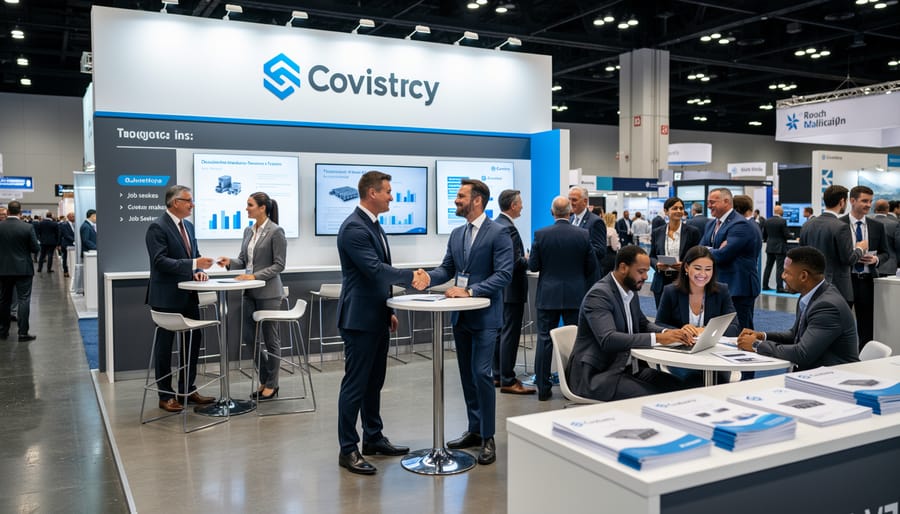
Industry-specific conferences and trade shows represent the most efficient path to connecting with hiring managers who have immediate openings and budget authority. Unlike general networking mixers, these events gather professionals who share your technical language and understand your specialized skills without lengthy explanations.
Tech conferences like AWS re:Invent, Google Cloud Next, or niche events for cybersecurity, AI, or software development attract companies specifically hunting for your expertise. Attendees are often senior engineers, CTOs, and VP-level decision-makers who can extend job offers on the spot or fast-track you through interview processes.
The real advantage lies in the concentrated environment. Spending three days at a specialized trade show exposes you to dozens of potential employers simultaneously, many of whom are actively recruiting to fill roles they cannot source through traditional channels. Booths staffed by engineering managers often double as informal interview stations.
For employers, these venues showcase your company culture and technical capabilities to pre-qualified candidates who already understand your industry challenges. The conversations start from common ground rather than basic explanations, dramatically compressing the typical recruitment timeline from months to weeks.
Come prepared with specific projects or technical challenges you have solved. Decision-makers at these events care less about polished elevator pitches and more about genuine technical competence demonstrated through substantive conversation.
Professional Association Meetings and Mixers
Professional association meetings and mixers offer something job seekers often overlook: consistency. Unlike one-off conferences, these monthly or quarterly gatherings let you build relationships incrementally. When the same people see you three months in a row, you shift from stranger to familiar face to trusted contact.
These smaller events typically draw 20 to 50 professionals who share your industry or specialty. That manageable size means you can have genuine conversations instead of speed-networking through business card exchanges. An engineer attending IEEE chapter meetings regularly can discuss actual projects with peers who understand the technical challenges, creating natural openings to mention they’re exploring new opportunities.
The real power emerges over multiple touchpoints. The person you chat with casually in February might remember you when their company opens a position in May. Employers appreciate candidates who demonstrate commitment to their professional community, not just those who appear when they need something.
Many associations run mentor programs or special interest groups within their regular events. Participating in these shows initiative while expanding your network beyond your immediate peer group to include senior professionals who influence hiring decisions. The membership fee typically ranges from 50 to 300 dollars annually, a modest investment for sustained access to decision-makers in your field.
Career Fairs and Recruitment Events
Career fairs and recruitment events strip away the resume screening bottleneck entirely. You walk into a room where hiring managers have dedicated time specifically to meet candidates, often with the authority to schedule interviews on the spot. Unlike other networking formats, these events exist for one purpose: connecting employers who need talent with professionals seeking opportunities.
The key advantage is immediacy. A 90-second conversation at a company booth can accomplish what three rounds of email exchanges might never achieve, establishing whether there’s genuine mutual interest. Companies invest in booth space precisely because they want to fill positions now, not months from now. When interacting at career fairs arrive with printed resumes tailored to the participating employers you’ve researched beforehand, and treat each booth conversation as a compressed interview.
Don’t waste time at every single table. Target five to eight companies where your skills genuinely match their posted needs, and prepare a 30-second introduction that names specific roles you’re pursuing. Ask substantive questions about team structure, upcoming projects, or technical challenges, this demonstrates you’ve moved beyond browsing their website. Collect business cards, note any next steps discussed, and follow up within 24 hours referencing your specific conversation.
How to Prepare for Professional Networking Events
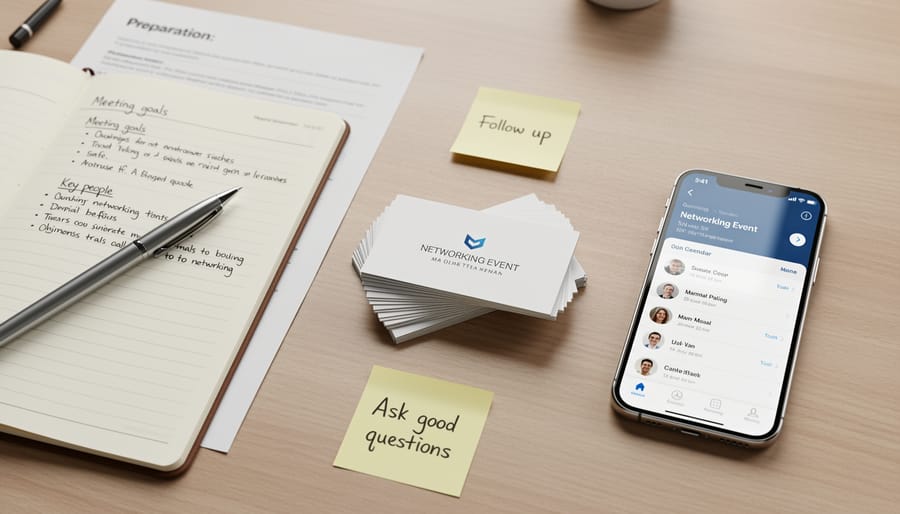
Walking into a professional networking event unprepared wastes your time and the opportunities in front of you. The difference between someone who lands meaningful connections and someone who collects business cards destined for the recycling bin comes down to preparation. Here’s how to show up ready to make an impact.
Start by researching the event itself. Find out which companies are attending, who’s speaking, and what specific roles they’re hiring for. Most professional networking events publish attendee lists or sponsor rosters ahead of time. Use LinkedIn to identify key people you want to meet, particularly hiring managers or team leads in your target area. Understanding the event’s format, panel discussions, open networking, speed interviews, lets you plan your approach accordingly.
Next, prepare your materials. Update your resume with your most recent accomplishments and ensure it’s tailored to the industries represented at the event. Print at least 20 clean copies on quality paper. Create or refresh business cards that include your LinkedIn profile URL and a clear headline describing what you do. If you’re in tech, having a portfolio or GitHub link easily accessible on your phone can set you apart when someone asks for examples of your work.
Here’s your preparation timeline for maximum effectiveness:
- One week before: Research attendees and companies, identify five specific people you want to meet, and prepare three questions for each based on their work or recent company news.
- Three days before: Update and print your resume, order or verify you have professional business cards, and practice your 30-second introduction out loud until it sounds natural.
- One day before: Choose your outfit (professional but comfortable), prepare a small bag or portfolio for materials, and review your target companies’ recent announcements or job postings.
- Day of event: Eat beforehand so you’re not distracted by hunger, arrive 15 minutes early to scope the room and collect yourself, and review your goals one final time before entering.
Craft your elevator pitch and actually practice it. This isn’t about memorizing a script that sounds robotic. You need a flexible framework that lets you introduce yourself confidently in 30 seconds or less, highlighting what you do, what you’re looking for, and what makes you different. Practice with a friend or record yourself. The goal is natural delivery that sounds like conversation, not a rehearsed sales pitch.
Set specific goals for the event. Instead of “meet people,” aim for “have meaningful conversations with three hiring managers in cybersecurity” or “connect with two senior developers and get their advice on breaking into AI development.” Concrete goals keep you focused and help you measure success afterward.
Finally, prepare mentally. Professional networking events can feel intimidating, especially if you’re naturally introverted. Remind yourself that everyone there wants to make connections, that’s literally why they showed up. Most people appreciate when someone approaches them with genuine interest and a good question.
Mastering the Art of Meaningful Connections at Events
Walking into a room full of professionals can feel overwhelming, but the difference between those who land opportunities and those who collect business cards lies in how they approach conversations. The goal isn’t to meet everyone, it’s to create a handful of genuine connections that people remember long after the event ends.
Start with strategic positioning. Rather than hovering near the entrance or hiding by the refreshment table, place yourself where natural conversations happen: near registration after the initial rush, in transition areas between sessions, or at high-traffic spots where people pause to check their phones. These locations give you natural opening lines and make it easier for others to approach you.
Your opening 15 seconds matter more than your resume. Skip the robotic elevator pitch and lead with curiosity instead. Ask specific questions about their current projects or how they’re finding the event, then listen actively. When someone asks what you do, frame your response around problems you solve rather than job titles. “I help companies reduce downtime in their cloud infrastructure” resonates more than “I’m a DevOps engineer.”
Body language speaks before you do. Maintain open posture with uncrossed arms, make genuine eye contact (not staring, but consistent acknowledgment), and angle your body toward the person speaking. Watch for engagement cues: if someone’s eyes drift or they shift their weight away, wrap up gracefully rather than forcing the conversation. The best networkers know when to move on.
Quality trumps quantity every time. Three meaningful 10-minute conversations create more value than fifteen surface-level exchanges. When you find common ground, a shared challenge, similar career path, or mutual interest, dig deeper. Ask follow-up questions that show you’re processing what they’re saying, not just waiting for your turn to talk.
Take brief mental notes during conversations rather than writing on their business card in front of them. Immediately after speaking with someone, step aside and jot down one distinctive detail: the project they mentioned, their upcoming conference, their golf hobby. These details transform your follow-up from generic to personal, making you the person they remember when opportunities arise.
The Follow-Up Strategy That Converts Connections Into Opportunities
The difference between collecting business cards and landing job offers lies entirely in what happens after the event ends. Most professionals let promising connections fade within 48 hours because they overthink the follow-up or delay too long. In 2026’s fast-moving job market, your window to capitalize on networking momentum is narrower than ever.
Send your first follow-up message within 24 hours while you’re still fresh in their memory. Reference a specific detail from your conversation to demonstrate genuine engagement, not generic networking. Instead of “Great meeting you yesterday,” try “Your insights on implementing AI-driven recruitment tools at your company gave me a new perspective on the challenges you’re facing.” This personalization separates you from the dozen other connections they made that evening.
- Send initial follow-up within 24 hours with a specific conversation reference
- Keep the first message brief (under 150 words) with a clear next step
- Propose a concrete action: coffee meeting, portfolio review, or informational interview
- Follow up a second time after 5-7 days if you receive no response
- Add value in every interaction rather than asking for favors immediately
After the initial contact, focus on building the relationship before requesting anything. Share a relevant article that relates to your discussion, congratulate them on a company announcement, or introduce them to someone in your network who could help with a challenge they mentioned. Northern Lights Canada’s most successful placements come from candidates who positioned themselves as valuable professional contacts first and job seekers second.
For employers, follow-up strategy works differently. Contact promising candidates within 12 hours, provide specific next steps about your hiring process, and respect their time by being direct about timeline and expectations. The candidates who impressed you at the event are likely fielding multiple opportunities, so your efficiency signals professionalism and genuine interest.
Track your connections systematically using a simple spreadsheet noting conversation highlights, agreed next steps, and follow-up dates. Set reminders to check in every 4-6 weeks with meaningful touchpoints, transforming one-time meetings into lasting professional relationships that yield opportunities when timing aligns.
What Employers Should Know About Networking Events as Recruitment Tools
For HR teams struggling to fill specialized roles in high-tech sectors, networking events represent one of the most efficient recruitment channels available in 2026. While job boards cast a wide net, professional networking events deliver pre-qualified candidates who are actively engaged in their industries and motivated enough to invest their time in career development.
The quality differential is striking. Northern Lights Canada’s placement data shows that candidates sourced through industry events require 40% less time-to-hire than traditional applicants and demonstrate 35% higher retention rates after two years. These candidates arrive with verified industry knowledge, established professional reputations, and often come recommended by peers in real-time conversations at the event itself.
Smart employers approach networking events with clear recruitment objectives. Before attending, identify your top three open positions and prepare a compelling 30-second pitch for each role that emphasizes growth opportunities rather than just requirements. Train your representatives to recognize talent indicators beyond what appears on resumes: thoughtful questions, technical depth in casual conversation, and genuine enthusiasm for industry challenges.
Building employer brand presence at these events requires consistency. Companies that send representatives to the same quarterly industry conferences build recognition and trust that pays dividends when candidates are evaluating offers. Consider sponsoring events where your ideal candidates gather, which positions your company as an industry leader while giving you premium networking access.
Measure ROI by tracking not just immediate hires but pipeline development. Every meaningful connection represents potential future talent. Assign team members to document conversations, add promising candidates to your talent database, and maintain relationships through periodic check-ins even when no immediate openings exist.
The most successful employers treat networking events as strategic recruitment investments rather than optional activities. In competitive markets where top talent receives multiple offers, the relationships and credibility you build at professional networking events often determine which offer gets accepted.
Professional networking events remain one of the most powerful accelerators for career advancement and talent acquisition in 2026. The strategies outlined in this guide work because they transform passive attendance into active opportunity creation. When you prepare thoroughly, engage authentically, and follow up strategically, these events become engines for meaningful professional relationships that lead directly to job offers and quality hires.
The data speaks clearly: professionals who consistently attend and apply these networking techniques land opportunities 40% faster than those relying solely on online applications. Employers who invest in networking events as part of their recruitment strategy access talent pools that competitors miss entirely. The difference lies not in showing up, but in showing up with purpose.
Your next step is simple but critical. Identify one professional networking event happening in your industry within the next 30 days. If you’re a job seeker, commit to implementing the preparation checklist and conversation framework we’ve discussed. If you’re an employer or HR professional, evaluate how networking events can complement your current recruitment channels and begin building your presence at industry gatherings where your ideal candidates congregate.
The professionals who thrive in high-tech and competitive industries don’t wait for opportunities to find them, they create those opportunities through strategic networking. Start now. Research upcoming events, block time on your calendar, and prepare to make connections that transform your career trajectory or strengthen your talent pipeline.